Rock Hill Ford - Is the Ford F-150® better for towing than the Toyota Tundra near Fort Mill, SC?
When shoppers ask whether the Ford F-150® is better for towing than the Toyota Tundra near Fort Mill, SC, the most useful answer starts with capability on paper and then moves into how the truck supports the driver in real situations. Toyota Tundra brings respectable strength, including an available i-FORCE MAX hybrid powertrain with 437 horsepower and 583 lb-ft of torque, plus a max towing rating of 12,000 lbs. That is enough for many trailers, boats, and recreational setups. The Ford F-150®, however, raises the ceiling with a max available towing rating of 13,500 lbs when properly configured, and that extra capability can matter when hauling larger campers, enclosed trailers, work equipment, or multi-purpose loads.
For drivers traveling between Fort Mill, Rock Hill, Charlotte, and job sites across the region, towing is not only about the highest number. A great towing truck also needs the right engine choices, confident handling, visibility tools, trailer-focused technology, payload strength, and cabin comfort. That is where the F-150® separates itself. Ford offers multiple engine options, including the 2.7L EcoBoost® V6, 3.5L EcoBoost® V6, 5.0L Ti-VCT V8, 3.5L PowerBoost® Full Hybrid V6, 3.5L High Output EcoBoost® V6 on Raptor®, and 5.2L Supercharged V8 on Raptor R™. This range lets shoppers choose a truck around specific needs instead of fitting every buyer into a narrower powertrain plan.
How the Ford F-150® towing advantage shows up
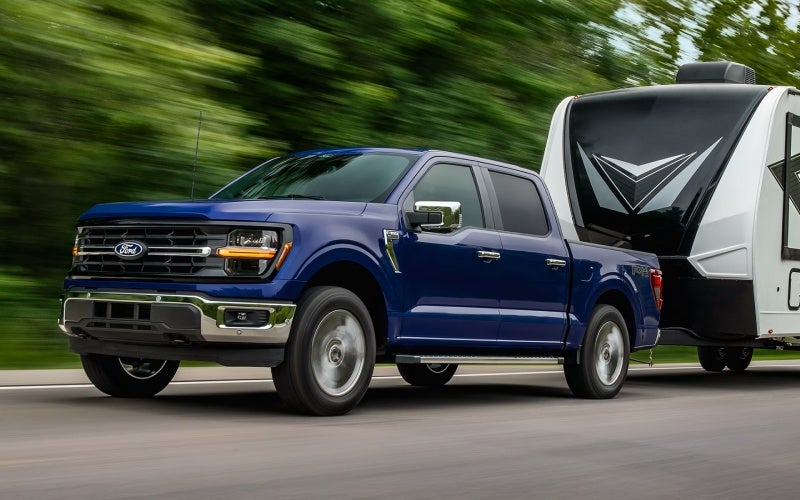
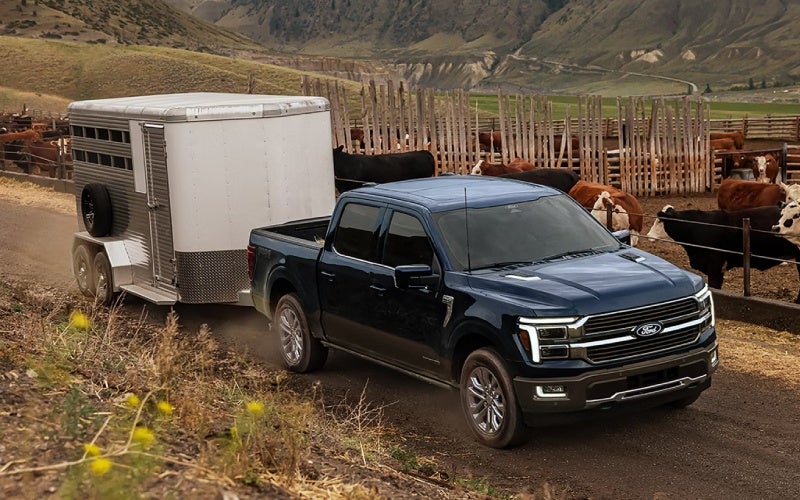
The F-150® has a best-in-class max available tow rating of 13,500 lbs with the 3.5L EcoBoost® V6, giving it a measurable advantage over the Tundra’s 12,000-lb max towing rating. For many truck owners, that difference is not just about towing heavier once in a while. It can also provide more confidence when carrying passengers, cargo, tools, and trailer equipment at the same time. When a truck is working near its upper limits, the right configuration matters, and Ford gives shoppers many ways to fine-tune cab, bed, axle, powertrain, and towing equipment.
The available 3.5L PowerBoost® Full Hybrid V6 is another Ford strength because it blends strong output with practical utility. With 420 horsepower, 570 lb-ft of torque, and up to 11,600 lbs of max available towing, it gives drivers a capable hybrid choice. Toyota’s i-FORCE MAX hybrid is powerful, and it may appeal to buyers who prioritize strong acceleration, but Ford’s broader engine lineup gives shoppers more flexibility. Some drivers want EcoBoost® turbocharged torque. Others prefer the character of a 5.0L V8. Some want hybrid functionality. Ford offers all of those options in one family of trucks.
What towing shoppers should compare beyond the rating
If you are comparing these trucks for towing around Fort Mill, SC, look beyond the headline rating and consider how often you tow, what type of trailer you use, and how much gear rides in the cab and bed. A camper, landscape trailer, equipment trailer, horse trailer, or boat can each create a different towing experience. The F-150® supports those varied needs with useful available features such as 360-Degree Camera, Pro Access Tailgate, Pro Power Onboard™, Tow Haul Package availability, and smart cabin storage.
- Maximum towing: Ford offers up to 13,500 lbs of max available towing, while Toyota Tundra lists a max towing rating of 12,000 lbs.
- Payload support: Ford offers up to 2,440 lbs of max available payload, while Toyota Tundra lists up to 1,850 lbs.
- Engine variety: Ford offers EcoBoost®, V8, hybrid, high-output, and supercharged performance options, while Tundra focuses on twin-turbo V6 gas and hybrid choices.
- Trailer access: Ford’s available Pro Access Tailgate can help improve bed access even when a trailer is attached.
That payload difference deserves attention. Towing capacity gets most of the spotlight, but payload affects how much weight can be carried in the truck itself. Passengers, tools, hitch weight, supplies, and bed cargo all count toward payload. With a max available payload of 2,440 lbs, the F-150® gives owners more room to work with than the Tundra’s listed 1,850-lb max payload. For contractors, outdoor enthusiasts, and families carrying gear, that added capacity can be just as important as the towing number.
Why the F-150® feels more adaptable for local truck life
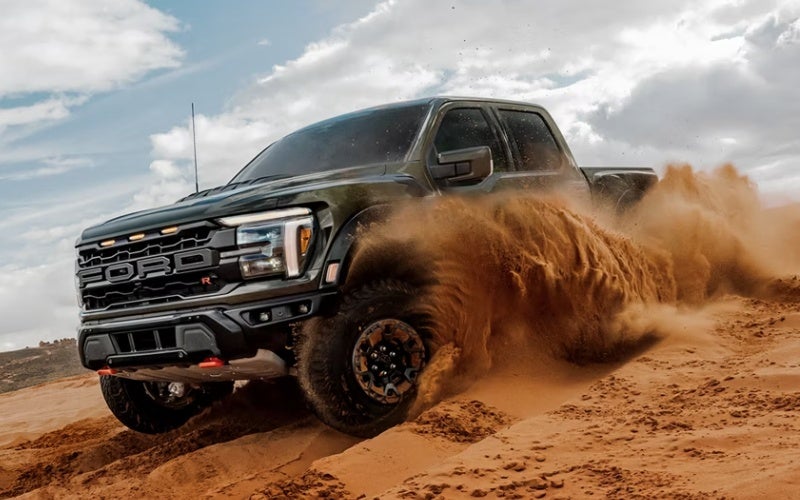
Fort Mill drivers often need a truck that can tow on the weekend, commute during the week, handle errands near Baxter Village or Kingsley, and still be ready for projects in Rock Hill or across the Charlotte metro area. The F-150® is especially strong because it is not built around one type of buyer. An XL or XLT can serve as a practical work partner. A Lariat®, King Ranch®, or Platinum® can deliver premium comfort and technology. Tremor® offers off-road capability, while Raptor® and Raptor R™ bring serious performance for drivers who want more than traditional truck capability.
The available Pro Power Onboard™ system also gives Ford an advantage for people who use a truck as a mobile workspace. Being able to power tools and equipment from the truck can help with jobsite tasks, outdoor projects, and situations where convenient electricity is valuable. Combined with the available Interior Work Surface, lockable rear under-seat storage, and flip and fold seating, the F-150® feels built for more than towing alone. It is a mobile office, gear hauler, family vehicle, and weekend partner.
Technology that supports towing confidence
Visibility and driver assistance can make a major difference when maneuvering a full-size truck and trailer. Toyota Tundra offers helpful available technology, including Panoramic View Monitor and Trailer Backup Guide With Straight Path Assist. Ford answers with available 360-Degree Camera, Ford Co-Pilot360® Technology, available head-up display, and available BlueCruise hands-free highway driving for compatible roads. While BlueCruise is not a towing replacement for attentive driving, it reflects how much Ford has invested in making highway travel feel more advanced and less tiring when conditions allow.
For shoppers who tow frequently, the ability to see around the truck, monitor key information, and stay comfortable over longer stretches can matter nearly as much as engine output. Ford’s cabin technology, available digital information displays, and thoughtful controls help drivers stay focused. Add in the F-150® model variety and tow-focused configurations, and the Ford truck becomes easier to tailor to the way you actually drive.
Frequently Asked Questions:
Which truck tows more, the Ford F-150® or Toyota Tundra?
The Ford F-150® offers a higher max available tow rating at 13,500 lbs when properly configured. Toyota Tundra lists a max towing rating of 12,000 lbs.
Does the Ford F-150® offer a hybrid engine for towing?
Yes. The available 3.5L PowerBoost® Full Hybrid V6 produces 420 horsepower and 570 lb-ft of torque, with an 11,600-lb max available tow rating.
Is payload important when choosing between these trucks?
Yes. Payload affects passengers, cargo, hitch weight, and gear in the truck. The F-150® offers up to 2,440 lbs of max available payload, while Tundra lists up to 1,850 lbs.
Which truck is better for mixed work and family use?
The F-150® is the stronger fit for many shoppers because it combines higher available towing and payload ratings with broad powertrain choice, available premium comfort, practical storage, and smart work features.
So, is the Ford F-150® better for towing than the Toyota Tundra near Fort Mill, SC? For shoppers who want the higher maximum towing rating, stronger max payload, more powertrain variety, and more truck-bed and cabin innovation, the answer is yes. Tundra is a capable pickup, but the F-150® offers a more complete towing and ownership package. If your truck needs to pull, carry, commute, and adapt to changing plans, Ford gives you more room to choose the right tool for the job.