Blog / Ford Bronco Sport

Which SUV offers better off-road tech for everyday driving around York, SC — the 2026 Ford Bronco Sport® or the 2026 Jeep® Compass?

Which SUV offers better off-road tech for everyday driving around York, SC — the 2026 Ford Bronco Sport® or the 2026 Jeep® Compass?

Rock Hill Ford - Which SUV offers better off-road tech for everyday driving around York, SC — the 2026 Ford Bronco Sport® or the 2026 Jeep® Compass?

When neighbors around York, SC ask which small SUV brings the most useful off-road tech to daily driving, two names always come up: the 2026 Ford Bronco Sport® and the 2026 Jeep® Compass. Both come standard with 4x4 and deliver a tidy footprint that fits easily into garages and tight downtown parking. But the way each brand approaches traction, control, and driver confidence is different—and that can shape how your SUV feels on Old York Road in traffic, on a quick hop to Lake Wylie, or on a packed gravel driveway after a summer shower.

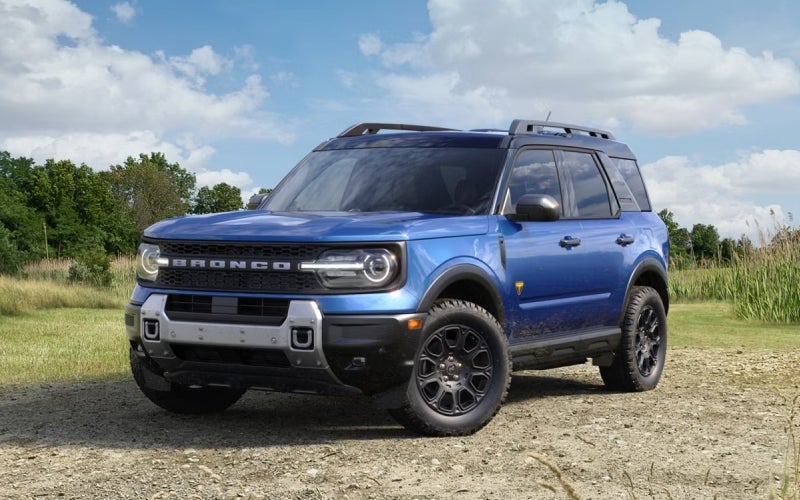
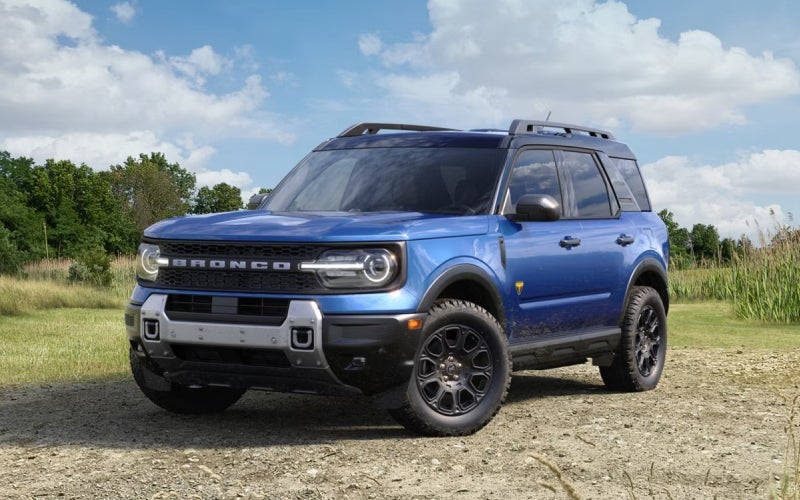
At a glance, the Bronco Sport leans heavily on smart, easy-to-use systems. Every model includes G.O.A.T. Modes®—you choose the surface, and the SUV optimizes throttle, transmission mapping, and stability control to suit. Badlands® turns things up with Advanced 4X4 and a twin-clutch rear drive unit that can actively send torque side to side across the rear axle for more precise cornering and better traction when surfaces change quickly. Add Trail Control—think off-road cruise control—and you can focus on steering while the vehicle manages slow-speed climbs or descents. Jeep Compass feels familiar to fans of the brand: it runs standard Jeep Active Drive 4x4, and Trailhawk® brings an available Jeep Active Drive Low 4x4 system with a 20:1 crawl ratio and Rock Mode through Selec-Terrain®. It’s capable and confidence-inspiring, especially at low speeds. The difference you’ll notice day to day is how the Bronco Sport’s torque-vectoring rear unit and Trail Control work together to smooth out mixed-surface transitions and winding backroads without extra input.

Display tech and driver confidence you can see

Cabin interfaces matter in real use. The Bronco Sport’s 13.2-inch center display makes camera views, drive modes, and navigation graphics easier to see at a glance. Wireless Apple CarPlay® and Android Auto™ come along, and the included Ford Connectivity package gets you a year of connected features and a Wi-Fi® hotspot. Jeep Compass counters with an available 10.1-inch Uconnect® screen and an available 10.25-inch Digital Cluster Display that’s crisp and customizable. If you prioritize a big, central touchscreen to manage your day, Ford has the edge; if you like an expanded digital cluster, Jeep’s setup is appealing. Both SUVs offer strong driver-assist suites: Ford Co-Pilot360® Assist+ is available on Bronco Sport, while Compass offers available Active Driving Assist and helpful tools like Drowsy Driver Detection. On rolling, tree-lined roads near York, SC, either system can take the edge off longer drives.

Can I tow my gear, and will it feel stable?

Short answer: both tow, but the Ford tows more. The 2026 Ford Bronco Sport is rated up to 2,200 pounds when properly equipped. That extra capacity can be the difference when you’re pulling a lightweight utility trailer with mulch for a weekend project or a pair of personal watercraft to Ebenezer Park. The 2026 Jeep Compass caps out at 2,000 pounds. Stability is where Ford’s hardware again shows benefits—its twin-clutch rear drive unit can send torque where it’s needed mid-corner, reducing understeer and helping the SUV feel planted when you turn from SC-5 onto curvier two-lanes. Jeep’s systems are sure-footed, especially at low speeds off-road, but they don’t offer that same torque-vectoring behavior.

Everyday livability and the little things

Small conveniences shape your experience more than spec sheets. Bronco Sport’s upright packaging yields great sightlines and headroom, plus smart cargo solutions—under-seat stow spots, available MOLLE straps on seatbacks, and liftgate flood lights with an integrated bottle opener for impromptu greenway picnics at Anne Springs Close. Heated front seats and a heated steering wheel are widely available in Ford’s lineup, while Jeep makes both standard across Compass models. Trail tires? You can get factory all-terrains on both—Falken® WILDPEAK® are standard on Compass Trailhawk®, while Bronco Sport offers grippy options on the right trims. If your weekends include trailheads or gravel lots, each SUV is up for it. Still, the Ford’s larger center screen and torque-vectoring 4x4 hardware combine to make daily life feel a bit more effortless.

As you compare, it helps to list what you do most. If you want the intuitive off-road tech that also makes curvy paved roads feel calm and tidy, the Bronco Sport has the advantage. If you lean into low-speed trail work and like Jeep’s design language, a Compass Trailhawk® may speak to you. For many shoppers, the Bronco Sport’s balance—standard 4x4, G.O.A.T. Modes®, available Trail Control, and that twin-clutch rear drive unit—covers the broadest range of daily and weekend needs around York, SC.

  • Standard traction systems: Bronco Sport includes 4x4 and G.O.A.T. Modes® on every model; Compass includes 4x4 and Selec-Terrain® across the lineup.
  • Advanced hardware: Bronco Sport Badlands® adds Advanced 4X4 with a twin-clutch rear drive unit; Compass Trailhawk® offers Jeep Active Drive Low 4x4 with a 20:1 crawl ratio.
  • Useful tech on the trail: Bronco Sport’s Trail Control helps regulate low-speed travel; Compass brings Hill Descent Control and Rock Mode on Trailhawk®.

For shoppers who split time between school runs, errands on Anderson Road, and occasional dirt or gravel stretches, the Ford’s systems feel more set-and-forget. Rock Hill Ford is proud to help you drive both back to back and talk through how the features you see on paper translate to the way an SUV behaves on the routes you travel most.

Frequently Asked Questions:

Does the Bronco Sport feel more stable in quick transitions than the Compass?

Bronco Sport Badlands® can—its twin-clutch rear drive unit actively vectors torque side to side, which helps the SUV rotate and hold a line with fewer steering corrections on curvy roads or split-traction surfaces. Compass is confident, especially in Trailhawk®, but it does not use a torque-vectoring twin-clutch rear axle.

Which has the bigger center screen?

Bronco Sport features a 13.2-inch center display with wireless Apple CarPlay® and Android Auto™. Jeep Compass offers an available 10.1-inch Uconnect® touchscreen and an available 10.25-inch Digital Cluster Display.

Is towing different between the two?

Yes. The 2026 Ford Bronco Sport is rated up to 2,200 pounds when properly equipped, while the 2026 Jeep Compass is rated up to 2,000 pounds. That additional headroom can be helpful for small utility trailers or watercraft.

Who should choose the Compass Trailhawk® instead?

If you prioritize a low-speed crawl ratio and Jeep’s Rock Mode for technical sections, Trailhawk® is compelling. If you want torque vectoring, Trail Control, and a larger center screen for everyday life and mixed surfaces, Bronco Sport takes the nod.

Our showroom team, serving Fort Mill, Indian Trail, and York, can help you map features to your roads and routines so your next SUV fits just right. When you’re ready to test the systems on your shortlist, plan a drive route that includes city streets, a stretch of highway, and a bit of rougher pavement to see how each setup feels with you at the wheel.

To schedule your side-by-side drive or ask for a feature walkaround, reach out online or stop by—our experts will tailor the comparison to what you do most. You deserve an SUV that turns capability into confidence all week long.

Rock Hill Ford is here to help you decide with clarity and confidence.
Request more 2026 Ford Bronco Sport information

Posted in:

Related Posts

Trail-Ready Control around Matthews, NC - How the 2026 Bronco Sport® Twin-Clutch 4x4 Works in Real Life

Trail-Ready Control around Matthews, NC - How the 2026 Bronco Sport® Twin-Clutch 4x4 Works in Real Life

Rock Hill Ford - Trail-Ready Control around Matthews, NC - How the 2026 Bronco Sport® Twin-Clutch 4x4 Works in Real Life The 2026 Ford Bronco Sport® is known for doing more than most compact SUVs, and nowhere is that more relevant than around Matthews, NC. Between busy stretches on Independence Boulevard and the gravel cut-throughs you find outside town, this SUV’s available Advanced 4X4 with a twin-clutch rear drive unit on Badlands® helps you keep traction without babysitting the throttle. If you’re curious what that actually means in daily driving—and why it matters for the mix of roads and weather we get here—this guide breaks it down in plain language. What the Twin-Clutch Rear Drive Unit Actually Does Think of it as a smart rear differential that can send torque to the wheel with the most grip. On a slick patch when you make a tight turn from Matthews Township Parkway onto a side street, the system can shift power side-to-side across the rear axle to keep you rolling without slip-and-spin drama. On dirt or wet grass—like a trailhead parking area or a backyard project—the hardware helps the Bronco Sport put power down evenly so you can pull away smoothly instead of digging in. Because the system reacts quickly, you don’t have to overcorrect the wheel or feather the throttle endlessly. You feel it as quiet, confident progress—especially on uneven surfaces where one rear wheel might lift slightly or lose contact for a split second. Where typical crossovers might hesitate, the Bronco Sport Badlands® keeps composure and momentum. G.O.A.T. Modes® You’ll Actually Use The magic of the Bronco Sport isn’t just in its mechanical grip. G.O.A.T. Modes® (Goes Over Any Type of Terrain) let you tailor throttle, shift mapping, and traction control to your environment. That means you’re not stuck with a one-size-fits-all setup on a day that throws different conditions at you. You can select the mode that matches where you’re headed—country gravel, washed-out two-tracks, or rain-slicked pavement—and the Bronco Sport responds accordingly. Normal: Balanced for everyday driving and commuting on NC-51 and local streets Eco/Slippery: Calms throttle response and optimizes traction when the weather turns Sport: Sharpens shifts and throttle for quicker responses on highway merges Mud/Ruts (Badlands): Optimized for loose, rutted surfaces and uneven trails Sand (Badlands): Helps maintain momentum on soft surfaces where wheelspin can build up What’s helpful is how simple these modes are to use—and how noticeable the differences feel. You don’t need advanced off-road knowledge to benefit; you just choose the mode that fits your plan and let the system do the heavy lifting behind the scenes. Why This Matters for Matthews Matthews drivers often split time between suburban errands and weekend plans that aren’t strictly on pavement. If your Saturday includes a run along Four Mile Creek Greenway followed by a supply pickup for a DIY project, traction variety is part of life. The Bronco Sport’s standard 4x4 gives you a solid foundation, and Badlands® takes it further with its twin-clutch rear drive unit and 7 G.O.A.T. Modes®. That depth of capability means you can adapt to changing surfaces and unexpected turns—without changing your route. Inside, the 13.2-inch center display with wireless Apple CarPlay® and Android Auto™ simplifies every trip. You can quickly pull up maps, call in an order from a local shop, or queue a podcast for the ride home—all wirelessly. Fewer cords, fewer taps, and more focus on the road ahead. Real-World Scenarios Where Bronco Sport Shines Gravel or washboard roads: The suspension and traction systems dampen chatter and maintain control. Uneven trailhead parking: Twin-clutch torque transfer helps you avoid wheelspin on off-camber spots. Heavy rain on Independence Blvd: Mode-based traction logic supports confident throttle and stable tracking. Small-trailer chores: With up to 2,200 lbs of towing when properly equipped, you can haul light gear for yard or weekend projects. These aren’t once-a-year moments—they’re the everyday use cases that make an SUV feel either stressful or seamless. The Bronco Sport tilts decisively toward seamless. Frequently Asked Questions: Do I need to switch modes every time the surface changes? No. Normal mode handles most daily driving very well. If you know you’ll be on loose gravel, mud, or sand for a while, switching to a terrain-focused mode can optimize traction and responsiveness. Is the twin-clutch rear drive unit always active? It’s on the Badlands® trim and works automatically as needed, sending torque to the rear wheel with the most grip. You don’t have to manually control it—just choose the right mode and drive. Does the big screen make a difference off-road? Yes. Clear mapping on the 13.2-inch display and wireless smartphone integration reduce distraction and make it easy to see your route at a glance, even when the road is bumpy. What about protection underneath the vehicle? Badlands® includes steel-plated front bumper elements and underbody protection—helpful when the path ahead includes embedded rocks, ruts, or surprise ledges. How does it compare to other small SUVs? Many rivals make all-wheel drive optional, and some limit terrain modes to specific trims. The Bronco Sport stands out with standard 4x4 and the Badlands® hardware that adds twin-clutch capability plus 7 G.O.A.T. Modes®. If you’re weighing whether this extra capability is something you’ll truly use around Matthews, the answer comes down to your week. If your routes vary—even a little—the Bronco Sport’s systems provide a helpful margin of control that you can feel, not just read about. It’s everyday-ready and trail-coachable in a way that makes driving simpler, not more complex. We’re proud to support drivers seeking that balance of capability and comfort, serving York, Clover, and Matthews with guidance that’s rooted in local roads and real-world needs. If you want a compact SUV that feels natural on neighborhood streets and calm on uneven paths, the 2026 Bronco Sport deserves a test drive. From the spacious, easy-to-use cabin tech to the mechanical grip you can rely on, it’s a vehicle that rewards curiosity—and makes confidence routine. Rock Hill Ford is here to help you explore the twin-clutch system, G.O.A.T. Modes®, and trim options so you can find your ideal fit. Request more 2026 Ford Bronco Sport information

Which compact SUV handles rough backroads better around York, SC — 2026 Ford Bronco Sport® or 2026 Subaru Crosstrek?

Which compact SUV handles rough backroads better around York, SC — 2026 Ford Bronco Sport® or 2026 Subaru Crosstrek?

Rock Hill Ford - Which compact SUV handles rough backroads better around York, SC — 2026 Ford Bronco Sport® or 2026 Subaru Crosstrek? If your weekend plans include gravel loops to pump tracks, muddy access roads to kayak put-ins, or a few ruts between you and that quiet trailhead, you’ve likely asked this question more than once: which compact SUV feels more sure-footed on unpaved surfaces, the 2026 Ford Bronco Sport® or the 2026 Subaru Crosstrek? Both are compact, efficient, and plenty friendly for daily commuting, but their traction strategies and trail tools aren’t the same. That’s where the decision gets interesting for York, SC drivers who want confident grip when the pavement ends, without giving up everyday comfort around town. Bronco Sport comes standard with 4x4 on every trim and G.O.A.T. Modes® that adjust throttle mapping, transmission behavior, and traction control to suit Sand, Slippery, Sport, Eco, and more. Badlands® adds Advanced 4x4 with a twin-clutch rear drive unit that can overdrive a single rear wheel, sending torque where it helps most when one side unloads. Crosstrek brings standard Symmetrical All-Wheel Drive and X-MODE to enhance low-speed traction, especially in slick conditions. Both systems inspire confidence, but Ford’s 4x4-first platform, torque-vectoring capability, and features like Trail Control (think low-speed off-road cruise control) deliver a calm, composed feel on surfaces that change every quarter mile—just like many of the region’s farm-to-market and lakeside roads. Traction tech that shows up when surfaces change fast On gravel, what matters most is consistency: how well the vehicle handles a mid-corner washboard, a patch of marbles kicked up by weekend traffic, or a soft shoulder after a shower. Bronco Sport’s HOSS Off-Road Suspension is tuned for tire contact and body control on imperfect ground, while G.O.A.T. Modes® reshape the vehicle’s responses so the chassis doesn’t feel startled when grip flips from firm to loose. Crosstrek’s suspension is supple and surefooted, especially in Wilderness trim, and X-MODE helps on steep climbs and descents. The difference is most noticeable in transitions—say, shaded clay followed by sun-dried gravel—where the Bronco Sport’s torque management and shock tuning keep steering inputs smooth and predictable. Another small but important advantage on backroads is the Bronco Sport’s conventional 8-speed automatic. It provides decisive shifts that feel locked-in on bumpy terrain, avoiding the elastic sensation some drivers notice with continuously variable transmissions. Subaru’s Lineartronic CVT is smooth and efficient; for many drivers it’s perfectly fine. But if you like a more direct connection between your right foot and the tires, Ford’s calibration and gearing deliver it without drama. Cabin tech to match the terrain tech Confidence isn’t just traction—it is also about awareness and ease of use. The Bronco Sport’s 13.2-inch display presents navigation, camera views, and Apple CarPlay®/Android Auto™ content with clean clarity, and the available Ford Co-Pilot360® Assist+ suite adds Adaptive Cruise Control with Stop-and-Go, Lane Centering, and more for your paved miles. Crosstrek’s 11.6-inch STARLINK display and EyeSight® Driver Assist Technology are polished too, and its newly available DriverFocus Distraction Mitigation System is a helpful cue for long days. For mixed-surface road trips, we find the Ford’s large screen and button layout especially helpful when you’re glancing between route maps and a changing horizon. Utility plays a role here as well. Bronco Sport’s flip-up rear glass lets you grab a cooler or camera bag without popping the whole liftgate—a boon on sloped pull-offs or tight shoulders. Integrated liftgate floodlights brighten your staging area at dawn or dusk, and interior MOLLE straps plus rubberized cargo surfaces keep muddy gear contained. Crosstrek’s cargo area is generous and practical, particularly in Wilderness trim with water-resistant upholstery, yet Ford’s small usability touches win over owners who load up, rinse out, and do it all again the next day. Which one is a better fit for your backroad routine? For York-area drivers who spend most miles on pavement and occasionally slip onto gravel, either SUV will handle the job. Where Bronco Sport distinguishes itself is when the route includes mixed traction, mid-corner bumps, and the odd off-camber driveway—the kind of variability that makes compact SUVs feel busy. Standard 4x4, HOSS suspension tuning, G.O.A.T. Modes®, and available torque-vectoring from the twin-clutch rear drive unit deliver the composure and steering calm that reduce fatigue and boost confidence. Add the 8-speed automatic’s direct feel and a cabin designed for gear, and the Ford builds a margin of control that shows up when you need it most. Shoppers who want the most capable Crosstrek will naturally gravitate to Wilderness. It’s a credible trail partner with thoughtful hardware. But if your question is which compact SUV feels more planted and predictable on the loose stuff around York’s outskirts, we’d recommend prioritizing a test drive of a Bronco Sport Badlands®. Find a loop with a bit of everything—hardpack, washboard, a few ruts—and pay attention to how the steering and throttle feel in transitions. That’s where the Ford’s 4x4 DNA shines through. How we help you choose with confidence We know this decision is about more than a spec sheet. It’s about how a vehicle fits your routine, your gear, and your favorite roads. Our team takes the time to map a route that matches the conditions you actually drive, and we’ll walk through trim differences so you’re not paying for features you won’t use—while making sure you get the hardware that matters for your kinds of adventures. Trail hardware differences: Understand how standard 4x4, G.O.A.T. Modes®, and a twin-clutch rear drive unit influence control on gravel. Drive feel on imperfect surfaces: Compare 8-speed automatic vs CVT behavior over washboard, ruts, and mixed-traction corners. Everyday usability: See how flip-up rear glass, liftgate floodlights, and cabin storage streamline the load-up and clean-up cycle. Have more detailed questions about traction systems, driver-assist features, or how to set up your SUV for roof-mounted gear? Our product specialists can demonstrate the systems and suggest practical accessories that fit your lifestyle. Frequently Asked Questions: Do G.O.A.T. Modes® make a noticeable difference on gravel compared to Subaru’s X-MODE? Yes—both are effective, but they work differently. G.O.A.T. Modes® in Bronco Sport adjust multiple vehicle parameters for each surface, while X-MODE augments Subaru’s AWD for low-speed traction. In quick-changing conditions, Bronco Sport’s broader tuning often feels more composed. Is the Bronco Sport’s 8-speed automatic better than a CVT for backroads? Many drivers prefer the direct, predictable shifts of an 8-speed automatic on bumpy or loose surfaces. Subaru’s CVT is smooth and efficient, but if you want a more connected feel when traction varies, the Ford’s gearing and shift logic can be an advantage. Which has smarter utility for outdoor gear? Both carry plenty, but Bronco Sport’s flip-up rear glass, liftgate floodlights, and MOLLE strap storage are purpose-built for frequent load-unload cycles on tight shoulders or sloped pull-offs. When you are ready to compare the two side by side, plan a route that mirrors your real roads and bring the gear you carry most weekends. We’ll help set up the right trims and demonstrate features so you can make a confident call. Rock Hill Ford is serving Indian Trail, York, and Clover with test routes and hands-on walkarounds tailored to the way you drive. If you’re starting your research online, bookmark a few unpaved segments near your usual haunts. Then schedule drives back-to-back to keep impressions fresh. The right answer is the SUV that feels natural and poised on your everyday loop—and for many York, SC drivers, that ends up being the Bronco Sport. Request more 2026 Ford Bronco Sport information

Does the 2026 Bronco Sport® offer wireless Apple CarPlay® and Android Auto™ near Monroe, NC?

Does the 2026 Bronco Sport® offer wireless Apple CarPlay® and Android Auto™ near Monroe, NC?

Rock Hill Ford - Does the 2026 Bronco Sport® offer wireless Apple CarPlay® and Android Auto™ near Monroe, NC? If you drive between Monroe and Charlotte on US 74 or hop the Monroe Expressway for a quicker run to I-485, seamless phone integration matters every single day. The 2026 Ford Bronco Sport® keeps that part simple with wireless smartphone connectivity designed to cut the cord, tidy your cabin, and keep your favorite maps, playlists, and messages close at hand. As your nearby Ford team at Rock Hill Ford, we’re breaking down exactly how wireless Apple CarPlay® and Android Auto™ work in the Bronco Sport, what you can expect on local roads, and a few pro tips to make setup and daily use effortless. What Monroe drivers can expect from the Bronco Sport’s wireless integration The 2026 Bronco Sport Big Bend® highlights a 13.2 inch center display with wireless Apple CarPlay® & Android Auto™ compatibility. That means no USB cable is required to mirror your phone’s key apps on the center screen. You’ll see familiar icons, turn-by-turn directions from your preferred maps, hands-free calling and messaging, and your favorite audio apps with responsive steering wheel controls and voice assistance. Wireless connectivity pairs well with real life around Monroe. Whether you’re navigating morning traffic past Atrium Health Union Hospital, coordinating pick-ups at Monroe High School, or heading out toward Cane Creek Park for a weekend hike, your apps appear where you need them—on the wide center display—so you can keep eyes forward and hands on the wheel. And because the Bronco Sport brings standard 4x4 with G.O.A.T. Modes® (Goes Over Any Type of Terrain), the tech isn’t just for your weekday grind—it’s a helpful co-pilot when dirt roads or trailheads are on the agenda. How to set up wireless Apple CarPlay® and Android Auto™ in a 2026 Bronco Sport Plan on a few minutes the first time, then the system will reconnect automatically when you start the SUV. Here’s how to get rolling. For Apple iPhone: On your iPhone, turn on Bluetooth and Wi-Fi. Start the Bronco Sport and wait for the 13.2 inch display to fully load. On the vehicle screen, open Settings, then look for Apple CarPlay options and enable wireless CarPlay. Select Add Phone or Pair New Device on the vehicle screen and choose your Bronco Sport in your iPhone’s Bluetooth menu. Confirm the pairing code on both screens. Accept any prompts to allow CarPlay and sync contacts. Choose Use CarPlay when asked. Your iPhone apps will appear on the center display. For Android phones: On your phone, turn on Bluetooth and Wi-Fi. Install or update the Android Auto™ app if needed. Start the Bronco Sport and enable Android Auto in the vehicle’s Settings. On the vehicle screen, tap Add Phone or Pair New Device and select the Bronco Sport in your phone’s Bluetooth menu. Approve the pairing code on both screens, and allow Android Auto permissions on your phone. Follow any on-screen prompts to complete setup. Your compatible apps now show on the center display. Once paired, the Bronco Sport will typically prioritize the last active phone. If more than one paired device is in the cabin, you can choose the preferred device in the vehicle’s Bluetooth menu. Tips for a smoother connection around Monroe A clean setup usually stays solid, but a few small habits make daily use even better—especially if you swap drivers or carry multiple phones in the vehicle. Update devices: Keep your phone’s OS and the Android Auto™ or Apple CarPlay® app current. Enable in-vehicle permissions: Make sure Apple CarPlay or Android Auto is toggled on in the Bronco Sport Settings menu. Set a primary device: In Bluetooth settings, mark your main phone as the priority to avoid confusion when family phones are nearby. Mind battery settings: Aggressive battery saver modes can limit background connectivity—consider exceptions for CarPlay or Android Auto. Reduce interference: If connectivity hiccups, temporarily disable hotspots on other passengers’ phones. Quick refresh: If audio stutters, toggle Bluetooth off and back on, or restart the infotainment system during a safe stop. How the Ford Connectivity Package complements wireless integration Beyond mirroring your favorite apps, the Bronco Sport’s available Ford Connectivity package—one year included—adds helpful capability for your crew. With a built-in Wi-Fi® hotspot, passengers can browse, stream, or join a video call on the way from Monroe to SouthPark while your phone continues to run navigation via CarPlay or Android Auto. It’s a smart way to keep the kids entertained or give a co-worker a reliable connection on the ride to a site visit in Indian Trail. Heading somewhere with spotty cell coverage—say a gravel access road outside Marshville or a fishing spot beyond Lake Twitty? CarPlay and Android Auto rely on your phone’s data signal for live traffic and search. Before you go, download offline map areas in your preferred app for uninterrupted turn-by-turn guidance. Pair that foresight with the Bronco Sport’s standard 4x4, HOSS Off-Road Suspension, and selectable G.O.A.T. Modes®, and you’ll be better prepared for both the road surface and your route. A quick note on safety and convenience—wireless projection is designed to minimize distractions, but it’s still important to set your destination before pulling out of your driveway in Monroe or merging onto US 601. Use voice commands for messaging and searches, keep notifications muted if they steal your focus, and let the system read messages aloud so your attention stays where it belongs. If you frequently switch between work and personal devices, the Bronco Sport’s system can store multiple phones. We’ll happily show you how to manage the paired-device list, set priorities, and fine-tune notification settings so weekday calls from clients come through clearly while weekend alerts stay quiet during a peaceful drive to Cane Creek Park. If you’re new to wireless mirroring, try a hands-on demo at our store. We’ll pair your phone, walk through Maps, Waze, Apple Music, Spotify, and popular podcast apps, then show you how voice control interacts with the Bronco Sport’s steering wheel buttons. You’ll leave confident that everything works the way you like before you ever pull out of our lot. Visit Rock Hill Ford for a personalized tech walkthrough and test drive From Monroe, it’s an easy trip to Rock Hill Ford—jump on the Monroe Expressway to I-485 and I-77 northbound, or take a scenic backroad route if you prefer. Our product specialists will set up your wireless Apple CarPlay® or Android Auto™ on the spot, answer compatibility questions, and help you explore trims like Big Bend®, Heritage, Outer Banks®, and Badlands®. While you’re here, take advantage of our Quick Lane for routine service without an appointment, and ask our team about accessories that fit your lifestyle, from all-weather mats to roof carriers for kayaks and bikes. Ready to see how the 2026 Bronco Sport® makes daily life in and around Monroe both simpler and more fun? Stop by for a test drive, or contact us to schedule a one-on-one tech session. We’ll make sure your phone, your routes, and your next adventure are all perfectly in sync. Frequently Asked Questions: Is wireless Apple CarPlay® and Android Auto™ standard on every 2026 Bronco Sport®? The Bronco Sport Big Bend® highlights a 13.2 inch center display with wireless Apple CarPlay® & Android Auto™ compatibility. Availability can vary by model and equipment, and we can confirm the exact features on any specific vehicle in our inventory. Do CarPlay and Android Auto use the Ford Connectivity package data? Apple CarPlay® and Android Auto™ primarily use your phone’s data. The Ford Connectivity package—one year included—adds a built-in Wi-Fi® hotspot for passenger devices and other connected features. After the included period, services may require activation. Can the Bronco Sport connect to more than one phone? Yes. You can pair multiple devices and set which one connects automatically. If more than one paired device is in the vehicle, the system typically connects to the last active or the priority device you select in Settings. We’ll help you customize that during your visit. What if my company phone has restrictions or a VPN? Some corporate device policies can limit Bluetooth or Wi-Fi functions needed for wireless projection. If your phone is managed by your company, check with your IT team about permissions for Apple CarPlay® or Android Auto™. We can also demonstrate a USB connection as an alternative. Will wireless CarPlay or Android Auto still work if I lose cell service on a rural road? The connection between your phone and the Bronco Sport remains, but live services that need data may pause. Downloading offline maps for your route ahead of time ensures turn-by-turn directions continue even when coverage dips. Request more 2026 Ford Bronco Sport information