Blog / Ford Explorer

Will a 2026 Ford Explorer tow my family camper from Indian Trail, NC to Morrow Mountain?

Will a 2026 Ford Explorer tow my family camper from Indian Trail, NC to Morrow Mountain?

Rock Hill Ford - Will a 2026 Ford Explorer tow my family camper from Indian Trail, NC to Morrow Mountain?

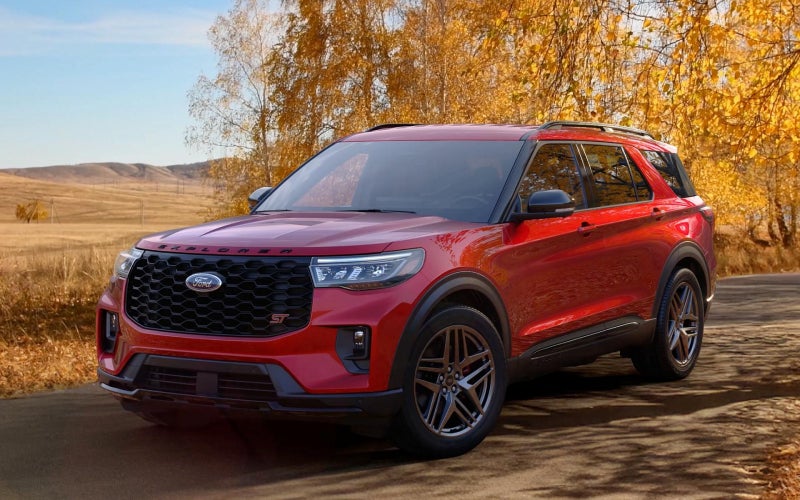
A properly equipped 2026 Ford Explorer® can confidently tow many small and midsize family campers from Indian Trail, NC to Morrow Mountain State Park — provided your trailer’s loaded weight stays within the Explorer SUV’s published 5,000-lb maximum towing capacity and you set up your rig correctly. Below, our Rock Hill Ford team walks through the real-world factors that determine whether your specific camper is a good match and how to plan a smooth trip from Union County to the Uwharries.

What this question really asks

“Will it tow my camper?” is really shorthand for several practical checks: the trailer’s actual weight with gear and water onboard, your tongue weight and payload, the route’s hills and traffic, and the SUV features that make towing feel stable and stress-free. Indian Trail drivers routinely mix suburban errands along US-74 with weekend getaways toward Albemarle and Morrow Mountain — so you need a setup that’s agile around Sun Valley and Monroe yet steady on rolling two-lanes west of NC-24/27.

What the 2026 Explorer brings to the table

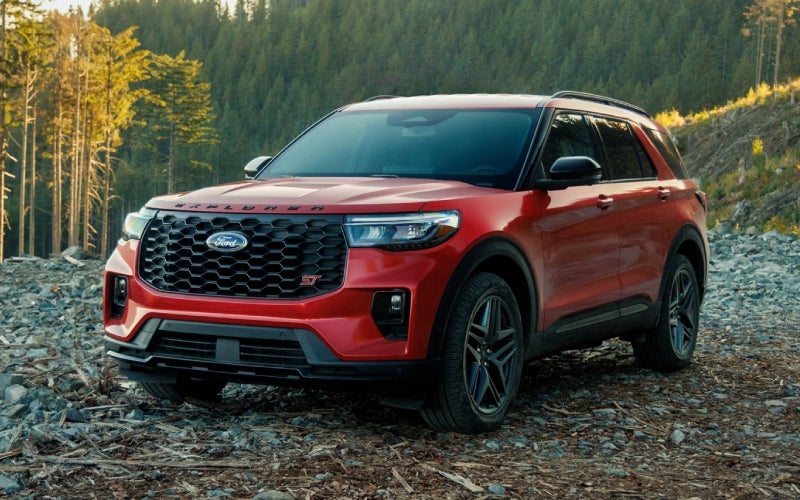
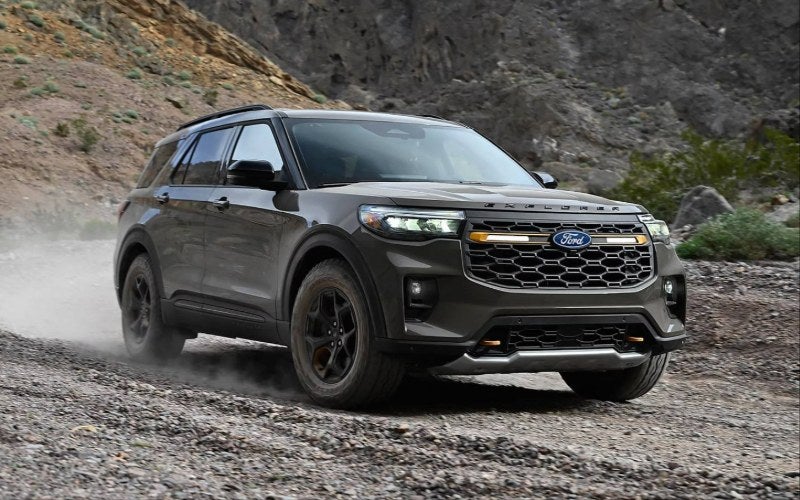
Every 2026 Explorer offers up to 5,000 lbs of towing capacity when properly equipped.79 That figure covers many single-axle travel trailers, lightweight hybrid campers, small toy haulers, and pop-ups. Power is on your side — the lineup offers up to a max available 400 hp68 — and available Intelligent 4WD pairs with Selectable drive modes to help you adapt on pavement or gravel. The Explorer Active 100A highlights useful gear including Ford Co-Pilot360® Assist+ with Adaptive Cruise Control, plus a Class III Trailer Tow Package that’s built for this job. If your weekend adventures include dirt access roads or uneven campground paths, the new Explorer Tremor® adds a Torsen® limited-slip rear axle, off-road tuned suspension with increased ride height, and underbody protection so you can reach trailheads with more confidence.

Before you circle a destination on the map, confirm the basics about your specific trailer and how you plan to pack. A few minutes of prep here can make the difference between a relaxing drive and a white-knuckle slog.

  • Trailer type and weight: Verify the trailer’s gross vehicle weight rating and estimate real trip weight with water, propane, food, and bikes.
  • Hitch rating: Confirm your Explorer’s Class III Trailer Tow Package and match the coupler, ball size, and hitch rating to your trailer.
  • Tongue weight: Aim for an appropriate tongue load — often about 10 percent of trailer weight — within the Explorer’s payload limits.
  • Trailer brakes: Use properly adjusted trailer brakes and follow North Carolina requirements for your trailer size; bring the correct wiring.
  • Payload and passengers: Count everyone and everything in the cabin and cargo area — payload reduces available tongue weight capacity.
  • Tires and pressures: Set SUV and trailer tires to spec; underinflation is a common source of sway and heat buildup.
  • Mirrors and visibility: Ensure you have a clear rearward view; add extension mirrors if needed for wider trailers.
  • Gear and cargo balance: Load heavier items low and forward in the trailer to promote stability on US-74 and 24/27.

With those fundamentals in place, it helps to plan for the actual drive from Indian Trail to Morrow Mountain. The route’s a mix of higher-speed corridors and scenic two-lanes, with a few rolling grades and occasional gusty crosswinds across open stretches. The Explorer’s chassis and available technologies are designed to de-stress those moments.

Indian Trail to Morrow Mountain — what to expect on the way

  1. Traffic flow on US-74: Expect on-ramps, lane changes, and variable speeds; the Explorer’s composed ride helps when merging or passing.
  2. Rolling grades near Albemarle: Maintain momentum without overworking the powertrain; downshift politely and keep engine braking in mind.
  3. Two-lane stretches: Plan safe pull-offs to check straps and tires; leave extra following distance for braking with a loaded trailer.
  4. Campground approaches: The last mile can involve tight turns or gravel; available Intelligent 4WD and the Tremor® model’s setup help here.
  5. Boat ramps and wet surfaces: If you tow a camper and bring kayaks, be mindful of slick ramps — traction aids and careful throttle are your friend.

If your trailer is well within the 5,000-lb limit and you keep tongue weight and payload in check, most families in Indian Trail will find the 2026 Explorer an easygoing tow partner — one that’s still easy to park at grocery lots along Younts Road or at the Sun Valley Commons area when you’re loading supplies.

Explorer features that make towing feel simpler

Beyond raw capacity, the Explorer includes smart touches that reduce fatigue and help you focus. The wide cargo area makes it simple to stage coolers, hiking packs, and a family tent without crowding the cabin, and available seating for up to seven lets you bring friends without sacrificing gear.20 Driver-assist features within Ford Co-Pilot360® technologies are designed to help you feel more confident behind the wheel,10 while Ford BlueCruise — when equipped and activated — provides hands-free highway driving assistance on compatible sections to help reduce fatigue on longer stints as you head out of the Charlotte metro area.127 Always keep your eyes on the road and be prepared to take control.

  • Class III Trailer Tow Package: Built to manage the Explorer SUV’s 5,000-lb tow rating when properly equipped.79
  • Available Intelligent 4WD: Adds traction on wet grass, gravel campground roads, and boat ramps.
  • Selectable drive modes: Helps you tailor throttle and shift behavior to conditions, from suburban stop-and-go to rural grades.
  • Ford Co-Pilot360® Assist+: Adaptive Cruise Control and additional aids support calmer, more consistent highway driving.
  • Max available horsepower: Up to 400 hp gives you confident merging and hill-climbing with a properly matched trailer.68

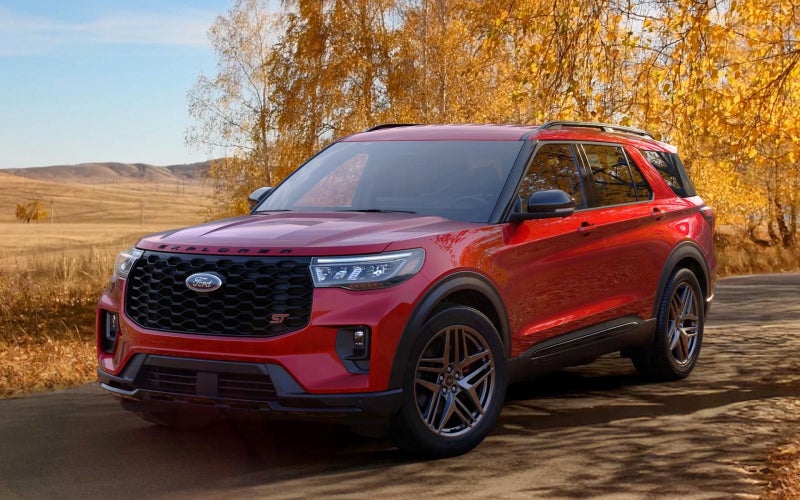
Trim choice comes down to how you travel. Explorer Active and ST-Line bring a confident daily-driver feel that transitions seamlessly to towing on weekends. Explorer Platinum™ adds comforts like available massaging front seats for the long return from the trailhead, and BlueCruise hands-free highway driving equipped on select models to help ease the miles.127 If part of your route to the campsite includes rutted pull-offs or you like to explore park fire roads where allowed, the Explorer Tremor® stacks capability — available 3.0L EcoBoost® power, a Torsen® limited-slip rear axle, off-road tuned suspension with increased ride height, and underbody protection — with a cabin that still cleans up nicely for weekday life in Indian Trail.

Day-of towing checklist — simple steps that pay off

A short, consistent routine helps every trip feel predictable. Do this while parked on a level surface before you head for US-74.

  1. Pre-trip inspection: Torque all lug nuts, test lights and brake function, and verify hitch pins and clips are secure.
  2. Load and balance: Place heavy items low and forward in the trailer; strap everything that could shift.
  3. Hitch and height: Confirm a level trailer with proper ball height; adjust weight distribution equipment if you use it.
  4. Tire pressures: Set SUV and trailer tires to door-jamb and trailer-placard specs for today’s temperatures.
  5. Mirrors and view: Adjust mirrors to see down both trailer sides; stow loose items in the cabin.
  6. Route brief: Check traffic on the Monroe Bypass and 24/27; plan a fuel and stretch stop before the grades.

As you settle into the drive, ease into the throttle, leave extra space, and make small steering inputs — the Explorer’s stable chassis rewards a light touch. If crosswinds pick up across open farmland, slow 5 to 10 mph and keep your hands relaxed.

When an Explorer might not be the right tool

If your camper’s loaded weight or required tongue weight exceeds the Explorer SUV’s limits, you will be better served by stepping up in tow class. Our team will happily help you compare options such as a Ford Expedition or a properly equipped Ford F-150® so you can match the right Ford to your trailer and trips without compromise.

Frequently Asked Questions:

Will a 2026 Ford Explorer really tow my family camper from Indian Trail, NC to Morrow Mountain State Park?

Yes — if your trailer’s loaded weight stays at or below the Explorer SUV’s 5,000-lb maximum when properly equipped,79 your tongue weight and payload are within spec, and your hitch and brake setup are correct. Many single-axle travel trailers, pop-ups, and lightweight hybrids fit this window. Our team can help you verify your exact trailer pairing before you book your campsite.

Do I need 4WD for this trip, or is rear-wheel drive enough?

Rear-wheel drive will handle the paved route from Indian Trail to the park when towing a properly matched trailer. Available Intelligent 4WD adds traction on wet grass, gravel campground roads, and boat ramps — a helpful confidence boost if your adventures regularly include unpaved approaches.

Which 2026 Explorer models are set up for towing from the factory?

The Explorer Active 100A highlights a Class III Trailer Tow Package in its key features. Other trims offer towing capability when properly equipped as well. Because equipment can vary, we recommend confirming the specific build on the Explorer you choose — our Rock Hill Ford team will review it with you so you leave fully set up.

Can I use driver-assist tech like BlueCruise while towing?

Explorer models equipped with BlueCruise provide hands-free highway driving assistance on compatible roads when the system is active and conditions are met.127 Always keep your eyes on the road and be ready to take control. We will show you how these features work and discuss best practices for towing during your test drive and vehicle delivery.

If you are starting in Indian Trail, the drive to Rock Hill Ford is a straightforward hop via I-485 and I-77 — close enough for a lunch-hour test drive yet far enough to give the Explorer a proper shakedown on real roads. Bring your trailer specs, and we will help you pair the right 2026 Explorer®, choose the proper hitch and accessories, and walk through your first tow-day checklist so your next Morrow Mountain weekend feels as easy as a Sunday spin down US-74.
Request more 2026 Ford Explorer information

Posted in:

Related Posts

Which three-row SUV tows with more confidence around Matthews, NC — 2026 Ford Explorer or 2026 Chevrolet Traverse?

Which three-row SUV tows with more confidence around Matthews, NC — 2026 Ford Explorer or 2026 Chevrolet Traverse?

Rock Hill Ford - Which three-row SUV tows with more confidence around Matthews, NC — 2026 Ford Explorer or 2026 Chevrolet Traverse? Towing confidence starts with the right fundamentals When Matthews, NC families ask which three-row SUV tows with more confidence — Explorer® or Traverse — we look past spec sheets and focus on how the vehicle behaves when you add people, cargo, and a trailer. On paper, both list up to 5,000 pounds of towing capability. The real difference shows up in how each SUV carries that load, keeps the cabin calm, and supports the driver with tech that shrinks the stress of hitching and highway miles. Explorer builds from a rear-wheel-drive architecture with available Intelligent 4WD. That RWD foundation naturally improves weight transfer and stability under acceleration, during lane changes, and while descending long grades on I-485. Add the available 3.0L EcoBoost® V6 — up to 400 hp — and you get reserve power that shortens merges and helps maintain momentum over rolling terrain without busy downshifts. Traverse counters with a turbocharged 2.5L that delivers strong output and smooth response. It’s a capable partner, especially for family gear runs. But if you plan to tow with consistency or want extra passing authority with a full cabin, Explorer’s power and balance advantage is obvious the first time you crest a hill with a trailer in tow. Control and visibility when it matters Confidence is as much about what you see and feel as it is about raw numbers. Explorer’s available 360-Degree Camera simplifies backing to a hitch and threading through crowded trailhead lots. Pair that visibility with the composed steering feel that comes from its RWD chassis, and your shoulders naturally relax on two-lane stretches outside of town. Traverse’s available HD Surround Vision offers a helpful multi-angle view as well, making low-speed maneuvers easier in tight spaces. For families planning light off-pavement adventures or boat-ramp launches, Explorer Tremor® adds Torsen® limited-slip hardware, an off-road tuned suspension with increased ride height, and underbody protection — hardware that grips uneven surfaces where a conventional open differential might spin a wheel. Traverse Z71 brings a Twin-Clutch AWD system, off-road suspension, and a skid plate — also a solid package for dirt access roads and weekend sites. Both can get you there; Explorer simply feels more planted doing it. Driver-assist tech that reduces towing fatigue Hands-free highway assistance is a key part of the modern towing equation. Explorer’s available BlueCruise supports hands-free driving on mapped highways, helping accelerate, brake, and steer while you remain engaged and watch the road. On long hauls toward the coast or mountain cabins, the reduction in micro-corrections helps you arrive with more energy. Traverse offers available Super Cruise® — similarly designed for hands-free operation on compatible roads — and it includes an extended plan on select trims. Each system can ease the grind of interstate towing; paired with Explorer’s power headroom and RWD steadiness, BlueCruise becomes one more layer in a confidence-focused package. Tech in the cabin can matter just as much as the hardware underneath. Explorer’s available B&O® Sound System by Bang & Olufsen® and premium seating — including available massaging front seats on Platinum™ — take the edge off longer missions. You’ll still arrive alert and composed, even when traffic stacks up through interchanges. Traverse brings an exceptionally large 17.7-inch touch-screen and a usable, organized interface that supports families juggling multiple devices. If your priority is screen real estate, Chevy has an edge; if you want a quieter, more restorative seat and sound pairing, Ford’s approach shines. How to choose between Explorer and Traverse for towing A thoughtful choice weighs where you drive, what you tow, and how often. Here’s a quick lens families use in our showroom: Primary use: If you tow more than a few weekends each year or regularly fill all three rows with passengers and gear, the Explorer’s available 3.0L EcoBoost® V6 and RWD architecture offer more composure and less strain. Road mix: For a commute that blends I-485 with two-lane trips to parks and regional lakes, both SUVs work; Explorer’s balance and available Torsen® hardware add margin on uneven surfaces. Cabin priorities: If premium seating and a tranquil cabin matter on longer drives, Explorer’s available massaging front seats and B&O® audio give it the nod; if your crew lives on big-screen interfaces, Traverse’s 17.7-inch display is a standout. Either way, driver-assist visibility matters. Both SUVs provide advanced surround-view cameras to streamline hitching and parking, and both offer hands-free highway assistance on compatible roads. The edge goes to Explorer when you add in how its steering and braking feel under load, the way the chassis settles over expansion joints, and the extra confidence from its available V6 when you need a quick pass with a trailer in tow. Frequently Asked Questions: Do I need a special package to tow with either SUV? Explorer offers a Class III Trailer Tow Package, and Traverse includes trailering equipment for its standard 5,000-lb rating. Your advisor can help you confirm the exact hardware on the trim you choose. How do BlueCruise and Super Cruise® help during towing? Both systems enable hands-free driving on compatible mapped highways. They reduce steering fatigue and can help you hold a steady pace and lane position while you remain attentive and watch traffic. Which feels more stable at highway speeds with a trailer? Explorer’s rear-wheel-drive foundation and available 3.0L EcoBoost® V6 give it an edge in composure and reserve power, which you’ll notice during merges, passes, and long grades. Can I take either SUV on unpaved access roads to campsites? Yes. Explorer Tremor® and Traverse Z71 add off-road suspension tuning and protective hardware. Explorer Tremor’s Torsen® limited-slip rear axle is particularly helpful on uneven surfaces where traction varies side to side. For families serving York, Clover, and Matthews with mixed weekly driving and a trailer in the plan, Explorer tends to deliver the more relaxed, confident experience once you add passengers and gear. Visit Rock Hill Ford for a quick configuration walk-through and a route that mirrors your daily drive — you’ll feel the difference in a single test loop. Request more 2026 Ford Explorer information

York, SC drivers get more out of every mile with the 2026 Ford Explorer® BlueCruise, flexible seating, and cargo smarts

York, SC drivers get more out of every mile with the 2026 Ford Explorer® BlueCruise, flexible seating, and cargo smarts

Rock Hill Ford - York, SC drivers get more out of every mile with the 2026 Ford Explorer® BlueCruise, flexible seating, and cargo smarts There is a reason the 2026 Ford Explorer® keeps showing up on shortlists for York, SC families: it makes everyday miles simpler, safer, and more comfortable without losing the spark that makes weekend plans fun. Between compatible-road hands-free driving with available BlueCruise, thoughtful seating for up to seven, and an interior layout that flexes for sports gear or a big warehouse club run, this SUV fits your schedule instead of the other way around. When your days stretch from school drop-off on Filbert Highway to an evening pickup near downtown York, that extra bit of calm really matters. Let’s start with the way the Explorer® handles bigger drives on SC-5 and SC-161. Available BlueCruise uses a network of pre-mapped, compatible highways where the system can help steer, accelerate, and brake while you keep your eyes on the road and hands at the ready. On long stretches, it cuts down on the constant micro-adjustments that can leave you fatigued. Think of a Saturday run to Lake Wylie, or a Sunday drive toward the mountains—those miles feel more manageable with a hands-free assist, and your attention stays where it belongs. Why BlueCruise matters around York, SC BlueCruise is at its best when you are linking together highway segments, as many York-area drivers do heading toward Rock Hill or Charlotte. It’s not a flashy gadget—it is an extra set of virtual hands that helps keep things steady when traffic ebbs and flows. Paired with Ford Co-Pilot360® technologies, it brings a confidence boost to daily driving. The net effect is focus where you need it most and a calmer cabin, which is especially helpful when second-row passengers are juggling backpacks, snacks, and homework. The Explorer® also understands that a great family SUV is more than just an easy highway cruiser. Inside, space and usability come first. The cabin delivers available seating for up to seven and up to 85.8 cubic feet of cargo room when you need to haul larger items. That means you can leave the third row up for carpool duty during the week, then fold seats flat for a quick supply run to support your next DIY project. The transition between people and gear is seamless, which is one of the reasons York families gravitate toward the Explorer®. Cabin flexibility, the everyday advantage What sets the Explorer® apart is how many comfort touches show up where you use them most. Available heated and ventilated front seats take the edge off changing temps, and on high-trim models like Platinum™, the massaging function turns a long day into a better evening. If your route includes waiting in pick-up lines around York Comprehensive High School, the available panoramic fixed glass roof with power sunshade brightens the cabin without flooding it with glare. And the available B&O® Sound System by Bang & Olufsen® with 10 speakers including a subwoofer makes podcasts and playlists sound concert-hall crisp. Hands-free help: Available BlueCruise supports compatible highway travel with steady, confidence-inspiring assist. Seating that adapts: Available room for up to seven plus quick-folding rows for more cargo flexibility. Entertainment built-in: The Ford Digital Experience supports apps, streaming, and Wi-Fi hotspot capability to keep riders engaged. Audio that impresses: Available B&O® system brings clear, deep sound for road trips and daily errands alike. Speaking of tech, the Ford Digital Experience is designed to feel familiar right away. From streaming entertainment while parked to cloud-connected features that help you find your next stop, it makes the cockpit feel modern without overcomplicating basic tasks. That balance matters when you’re splitting attention between directions to a soccer field and the backseat’s request for the next episode of a favorite show. The interface is quick, clean, and focused on giving you control with minimal distraction. Capability when you need it York drivers also benefit from the Explorer® foundation—a rear-wheel-drive architecture that delivers composed handling and confident towing. With up to 5,000 pounds of towing capacity when properly equipped, it’s ready for small campers or watercraft at Allison Creek. If your weekends lean more toward trailheads and gravel roads, the Explorer® Tremor® turns up traction with a Torsen® limited-slip rear axle, off-road tuned suspension, and added underbody protection. It’s rugged capability without giving up daily comfort. For those who want extra performance in a polished package, the Explorer® ST brings the available 3.0L EcoBoost® engine, sport-tuned suspension, and performance brakes with red-painted calipers. It’s a compelling mix for drivers who want family-size practicality with a more athletic edge. No matter which trim you lean toward—Active, ST-Line, Tremor®, Platinum™, or ST—the common thread is smart engineering aimed at real-world utility. Rear-drive poise: The Explorer® platform supports steady towing and balanced handling. Tow-ready: Up to 5,000 lbs when properly equipped for boats and small campers. Trail-focused Tremor®: Off-road tuned hardware adds confident traction beyond pavement. Performance-minded ST: Available 3.0L EcoBoost® with chassis upgrades for an engaging drive. The beauty of the 2026 Explorer® is how well it matches the variety of driving York households do in a single week. Monday might be meetings in Rock Hill, Wednesday a detour to pick up supplies in Clover, and Saturday a family day on the water. The Explorer® steps into all of it effortlessly: quiet ride, flexible seating, thoughtful tech, and the right kind of capability. That is exactly what makes it a smart long-term addition to your driveway. At Rock Hill Ford, we focus on helping you choose the Explorer® that fits your patterns—commuting, carpooling, and weekends that earn a little adventure. Our team listens first, then helps you weigh the benefits of BlueCruise availability, seating configurations, and performance or comfort upgrades based on how and where you drive. One size never fits all, and the 2026 Explorer® lineup ensures you don’t have to compromise to get the features you value most. We are proud of how this SUV blends advanced assistance with tactile, real-world functionality. It is not just the hands-free assist or the elegant cabin details. It is how the Explorer® shrinks the friction points of busy days—parking, merging, loading, unloading—and turns them into afterthoughts so you can focus on what actually matters. For families and commuters around York, that reliability and ease go a long way. If you are mapping out your next upgrade, it helps to look at your week as a whole. Where could hands-free highway assist reduce fatigue? When does the third row matter? How often do you tow? How important is immersive audio or an extra-comfortable driver’s seat? Work backward from those answers and the right trim—Active, ST-Line, Tremor®, Platinum™, or ST—rises to the top. We are here to guide, not push, and to make sure you find the Explorer® that will still feel right years down the road, serving York, Clover, and Matthews. Frequently Asked Questions: Is BlueCruise worth it for my commute from York to Charlotte? If your routine includes long, steady highway stretches, BlueCruise can reduce fatigue and help you arrive more refreshed. Many drivers find the hands-free assist on compatible roads particularly helpful on SC-5 to I-77 connectors and farther into the Charlotte corridor. How much can a 2026 Explorer® tow for weekend plans? When properly equipped, the Explorer® offers up to 5,000 pounds of towing capacity, which suits small campers and watercraft for Lake Wylie or regional parks. Which trim is best if I want a premium feel? Explorer® Platinum™ adds upscale touches like heated, ventilated, massaging front-row seats with leather inserts and available panoramic fixed glass roof with power sunshade—ideal if daily comfort is a priority. What if I want extra performance? Explorer® ST features the available 3.0L EcoBoost® engine with a sport-tuned suspension and performance brakes—perfect for drivers who want family-ready space with a more engaging drive. Request more 2026 Ford Explorer information

Which three-row SUV has the more advanced hands-free driving tech for York, SC families — 2026 Ford Explorer or 2026 Toyota Highlander?

Which three-row SUV has the more advanced hands-free driving tech for York, SC families — 2026 Ford Explorer or 2026 Toyota Highlander?

Rock Hill Ford - Which three-row SUV has the more advanced hands-free driving tech for York, SC families — 2026 Ford Explorer or 2026 Toyota Highlander? When local families ask about hands-free driving features, they’re often comparing two favorites: the 2026 Ford Explorer and the 2026 Toyota Highlander. Both SUVs offer robust driver-assist suites designed to reduce stress and support confident decision-making, but they go about it differently. If your daily loop swings from neighborhood streets to I-77 and back again, understanding where each system shines — and where one clearly outpaces the other — can simplify your decision. Here’s the simple breakdown: Explorer offers available BlueCruise, a hands-free highway driving assistance feature for use on compatible divided highways. Highlander, by contrast, includes Toyota Safety Sense 2.5+ with helpful features like Lane Tracing Assist, but it does not provide hands-free operation. That singular difference resonates on real highways around York, SC, where long commutes, after-school shuttles, and weekend tournament trips put a premium on reducing driver fatigue without compromising control or awareness. What does “hands-free” really mean — and where does it work here? Hands-free means the system can assist with acceleration, braking, and steering on pre-mapped, compatible highways while the driver remains attentive with eyes on the road. BlueCruise is engineered for divided highways where traffic flow and lane markings support safe, predictable operation. Around York, that can mean stretches of I-77 and I-485, as well as other mapped corridors you may use to reach airports, ball fields, and weekend destinations. The Chevy vs. Ford debate often lives in the towing arena; here, when it’s 2026 Ford Explorer vs 2026 Toyota Highlander on the highway, Explorer’s capability is less about raw muscle and more about giving you a break when it matters most. Highlander’s Toyota Safety Sense 2.5+ does a great job with active support: it can help keep centered in-lane, follow a vehicle at a set distance, and alert you to hazards. Drivers who spend most of their time on surface streets may find that suite entirely sufficient. But if your schedule includes extended highway time — work commutes, club sports, or family road trips — BlueCruise’s true hands-free assistance is purpose-built for those exact scenarios. How does BlueCruise feel compared to “hands-on” lane support? BlueCruise complements your natural flow. Once you’re on a compatible highway and conditions are met, the system manages the steady-state driving tasks with remarkable composure. It won’t replace your attention — your eyes remain on the road — but it reduces the subtle workload that adds up over 30, 60, or 90 minutes behind the wheel. In the Highlander, Lane Tracing Assist feels smooth and reassuring but remains a “hands-on” technology; your hands stay on the wheel, and steering support is more of a helper than a driver-steadying partner. That difference is easy to sense on the long arc from the state line to South Charlotte or up to the lake area on a Friday evening. BlueCruise maintains lane position and distance with a confidence that makes conversations easier and fatigue grow slower. It’s the kind of feature you don’t think you need until the day you realize you arrived fresher and more focused. Beyond the drive: how Explorer and Highlander support families Safety tech is only part of the conversation. Explorer layers in the B&O® Sound System by Bang & Olufsen® (available) for crisp calls and music, a 360-Degree Camera to simplify parking near busy ball fields, and available heated, ventilated, and massaging front seats for real comfort on long days. Highlander answers with available 12.3-inch displays, a Panoramic View Monitor, and a thoughtful cabin layout that can seat up to eight. Both tow up to 5,000 lbs, which is more than enough for many family trailers and small boats. Where power and composure matter, Explorer’s available 3.0L EcoBoost® V6 and Max. Avail. Horsepower of 400 hp make highway merges and hilly routes feel effortless. Highlander’s turbocharged 2.4L gas engine is smooth and strong for daily needs, and the available Hybrid option appeals to drivers who want an electrified alternative. If your routine mixes urban errands with weekly highway commitments, you’ll likely feel the Explorer’s extra power in the moment that counts — a clean pass before the next exit or a steady climb with a full load. Test-driving the difference around York, SC To truly compare, focus on your everyday realities. Plan a route that includes a compatible highway segment for BlueCruise and a few surface streets for parking, roundabouts, and traffic lights. Bring the family, fold seats, and simulate a typical week — groceries, sports equipment, and a couple of backpacks. In Explorer, engage BlueCruise when conditions allow; in Highlander, try Lane Tracing Assist and Adaptive Cruise Control in comparable traffic. Note how each SUV handles interruptions — lane shifts near construction, tighter merges, and the stop-and-go patterns that define late afternoons near retail corridors. Also think about your towing needs. If you occasionally pull a small camper or a pair of personal watercraft, both SUVs can handle it. But the RWD-based platform and available hardware upgrades on Explorer can give it a planted, composed feel with a trailer attached — especially helpful when you’re leaving a lakeside launch on a sloped, damp surface. Quick highlights you can feel in a test drive Hands-free capability: Explorer’s BlueCruise provides true hands-free assistance on compatible highways; Highlander does not offer hands-free operation. Highway confidence: Explorer’s available 3.0L EcoBoost® and 400 hp create effortless passing power; Highlander’s gas engine is capable but less forceful. Parking and maneuvering: Both offer bird’s-eye camera views that help in tight athletic complex lots and busy shopping areas. Comfort for long days: Explorer’s available massaging front seats and premium audio can reduce fatigue; Highlander counters with expansive displays and an available panoramic roof. Frequently Asked Questions: Is BlueCruise available on every Explorer trim? BlueCruise is available on select Explorer trims and helps with acceleration, braking, and steering on compatible divided highways while you remain attentive with eyes on the road. Does Highlander offer a hands-free driving feature like BlueCruise? No. Highlander includes Toyota Safety Sense 2.5+ with lane centering and adaptive cruise functions, but it does not support hands-free highway driving. How do both SUVs compare for towing family gear? Both the 2026 Explorer and 2026 Highlander offer up to 5,000 lbs of towing capacity, suitable for small campers, utility trailers, and watercraft. Which SUV is better for long I-77 commutes? If you spend considerable time on compatible highways, Explorer’s BlueCruise can reduce fatigue by taking over steady-state tasks, making it a strong pick for extended commutes. Choosing between these two comes down to your daily mix of roads and priorities. If true hands-free highway assistance is high on your list, Explorer stands alone. If you value an electrified option, Highlander’s Hybrid may appeal. For a test drive that matches your real routes, Rock Hill Ford is serving Indian Trail, York, and Clover with side-by-side drives designed around how you actually live and travel. Schedule time to sample BlueCruise on a compatible local route, compare parking tech in busy lots, and bring your family “crew” to ensure the third-row and cargo solutions work the way you need. That’s the surest way to land on the right SUV for many seasons ahead. Request more 2026 Ford Explorer information