

Rock Hill Ford - Should Waxhaw, NC drivers choose SRW or DRW on a 2027 Ford Super Duty F-350?
Choosing between single rear wheel and dual rear wheel is one of the most important configuration decisions for Waxhaw, NC shoppers considering a 2027 Ford Super Duty® F-350®, because it affects towing confidence, payload capacity, daily maneuverability, parking, tire costs, and how the truck feels on local roads.
For many owners around Waxhaw, the right answer depends less on the biggest number in a brochure and more on what the truck will actually do every week. A single rear wheel F-350® can be a strong fit if you need serious capability but still drive through neighborhoods, business lots, school pickup lines, downtown Waxhaw, or along tighter roads near Providence Road and NC-16. A dual rear wheel F-350® makes more sense when your routine includes heavy gooseneck towing, large equipment trailers, high payload demands, or long-distance hauling where added rear stability is a priority.
The Core Difference: Stability vs Everyday Maneuverability
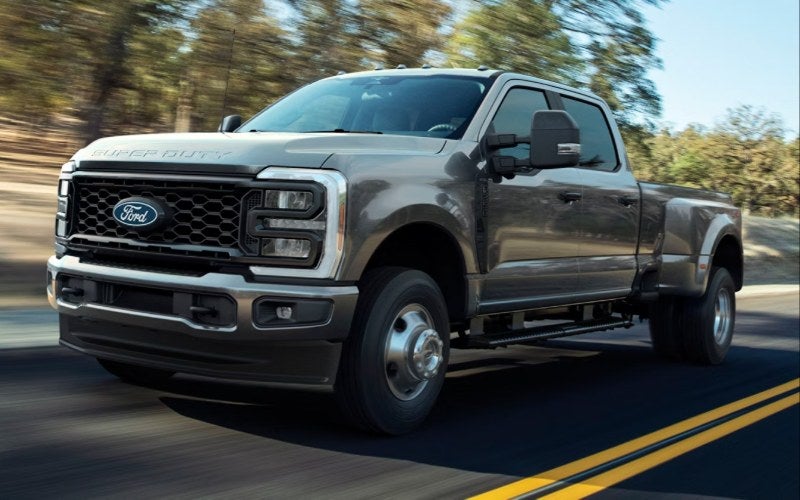
A single rear wheel, often called SRW, has one wheel on each side of the rear axle. A dual rear wheel, often called DRW or a dually, has two wheels on each side of the rear axle. That extra rear tire contact patch gives a DRW truck more stability under heavy tongue weight or bed load, especially when towing tall or heavy trailers. Ford notes that DRW is ideal for heavy-duty towing and hauling due to greater stability, higher towing and payload capacity, and improved weight distribution.
SRW is typically better suited for light to moderate towing and everyday driving because it is easier to maneuver. Around Waxhaw, that matters. If your truck has to fit into a residential driveway, access a jobsite off a narrower road, pull into a grocery store parking space, or navigate around downtown traffic, the slimmer rear width of an SRW F-350® can make daily ownership simpler. At Rock Hill Ford, we like to help shoppers think about where the truck will spend the most time - not just what it can do on its most demanding day.
When SRW Makes Sense for a Waxhaw Driver
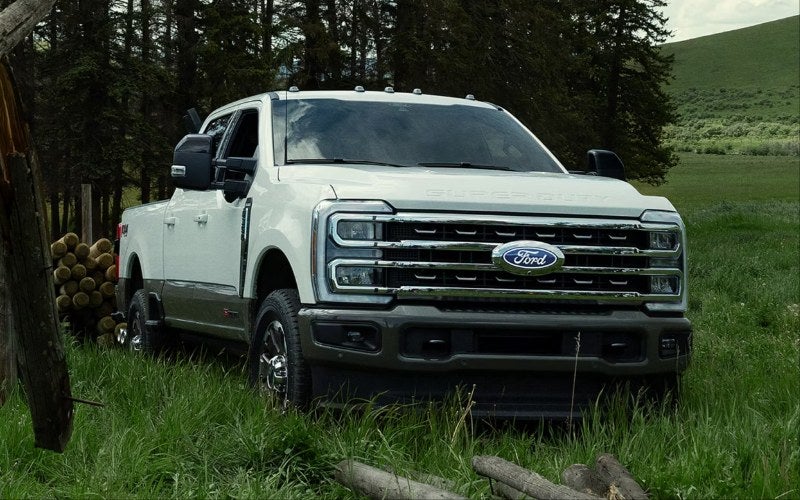
An SRW 2027 Ford Super Duty® F-350® is a smart direction if you need strong truck capability without committing to the additional width and rear tire setup of a dually. It is often the more practical choice for owners who tow on weekends, carry tools during the week, and still use the truck for family errands or commuting toward Ballantyne, Indian Land, Fort Mill, or Rock Hill.
SRW can be especially appealing if your trailer needs are substantial but not at the upper end of Super Duty® capability. The 2027 Super Duty® offers impressive towing and payload ratings when properly equipped, with capability depending on configuration, engine, drivetrain, axle ratio, cab, bed, and towing equipment. For shoppers pulling utility trailers, smaller equipment trailers, enclosed work trailers, or recreational trailers, an SRW F-350® may offer the balance of strength and usability that fits real life.
- Daily parking: SRW is easier to place in standard parking spaces and driveways.
- Local road comfort: SRW feels less wide on two-lane roads around Waxhaw and Union County.
- Mixed-use ownership: SRW works well for owners who tow, commute, haul supplies, and run errands in the same truck.
- Trailer flexibility: SRW can still support serious towing when properly equipped for the trailer and load.
- Lower rear tire complexity: SRW uses one tire per side at the rear instead of two, which simplifies tire replacement planning.
That said, SRW should not be chosen simply because it is easier to live with. If your trailer or payload needs are consistently heavy, or if you are close to the top of your required ratings, DRW deserves a very serious look.
When DRW Is the Better Ownership Choice
A DRW 2027 Ford Super Duty® F-350® is built for owners who prioritize maximum hauling stability and confidence. This is the setup many shoppers consider when towing large gooseneck trailers, horse trailers, heavy construction equipment, big fifth-wheel campers, landscape trailers with compact machinery, or commercial loads where stability and payload margin are key.
Waxhaw has a wide range of truck use cases. Some owners need a capable personal truck for property upkeep, while others operate businesses that travel between Union County, Charlotte-area job sites, York County, and beyond. If your F-350® will regularly tow at highway speeds, merge onto I-485 with a loaded trailer, or carry heavy material in the bed, DRW can provide a steadier feel from the rear axle. The extra rear tires help distribute weight and can improve composure when the truck is properly matched to the trailer.
- Heavy gooseneck towing: DRW is the stronger choice when trailer weight and pin weight are consistently high.
- Large fifth-wheel campers: DRW can add stability for tall, heavy RVs on longer trips.
- Commercial hauling: DRW supports owners who routinely carry equipment, materials, or loaded service bodies.
- Added rear stability: DRW helps the truck feel more planted with substantial weight over or behind the rear axle.
- Greater payload potential: DRW configurations are often selected by owners who need more payload capacity.
The tradeoff is that a dually is wider at the rear. Before choosing DRW, it is worth thinking through garage space, driveway width, jobsite access, car wash clearance, parking habits, and how often you drive without a trailer. If the truck is primarily a work tool or tow vehicle, those tradeoffs may be easy to accept. If it is also your everyday family vehicle, our team can help you compare both setups side by side.
How Engine Choice Fits Into the SRW vs DRW Decision
The 2027 Ford Super Duty® F-350® offers the 7.3L 2V DEVCT NA PFI V8 Gas engine and the available 6.7L High-Output Power Stroke® V8 Turbo Diesel B20 engine. The gas engine is rated at 420 horsepower and 445 lb-ft of torque, while the available diesel is rated at 500 horsepower and 1,200 lb-ft of torque. Those numbers matter because torque, gearing, truck configuration, and towing equipment all work together to determine how confidently the truck moves a load.
If your towing is occasional and your payload needs are moderate, the gas engine in an SRW F-350® may be a strong fit. If your work involves heavier trailers, frequent long-distance towing, or repeated hill climbs with loaded equipment, the available 6.7L High-Output Power Stroke® V8 Turbo Diesel B20 engine pairs naturally with a capability-focused setup. The engine does not automatically decide SRW or DRW, but it should be considered as part of the full configuration.
Technology That Helps With Real Towing Tasks
The SRW vs DRW decision is mechanical, but the 2027 Ford Super Duty® F-350® also offers technology that can make ownership easier. Available features like the 360-Degree Camera, trailer reverse guidance, PowerScope® trailer tow mirrors, head-up display, and the 12" center display with SYNC® 4 can help reduce stress when hitching, parking, backing, and monitoring the truck. Ford Co-Pilot360® 2.0 technology also adds helpful driver-assist confidence, and the Tire Pressure Monitoring System is valuable for keeping an eye on an important part of towing safety.
For Waxhaw contractors, property owners, and recreational haulers, practical exterior features matter too. Available Pro Power Onboard™ - 2 kW can power equipment through in-bed outlets, and integrated box side and rear corner steps can make bed access easier when loading tools, supplies, feed, hardware, or gear. These details may not decide SRW versus DRW by themselves, but they make the F-350® feel purpose-built for long days and demanding tasks.
A Practical Way to Choose at Rock Hill Ford
The best way to choose between SRW and DRW is to map your real loads before you select the truck. At Rock Hill Ford, we can walk through your trailer type, expected cargo, passenger count, hitch style, cab preference, bed length, engine choice, 4x2 or available 4x4 needs, and whether an 8' bed or 6.75' bed better fits your routine. The 2027 Super Duty® lineup offers Regular Cab with an 8' bed, SuperCab™ with a 6.75' or 8' bed, and Crew Cab with a 6.75' or 8' bed, so the rear-wheel decision is only one part of building the right truck.
If your F-350® will spend most days towing large trailers or carrying heavy payload, DRW is likely the more confidence-focused choice. If you need serious Super Duty® strength but still want easier daily driving around Waxhaw, SRW may be the better all-around fit. Our team at Rock Hill Ford is here to help you compare configurations clearly, without pressure, so your truck fits the work, roads, trailers, and ownership experience you actually have in mind.
Frequently Asked Questions:
Is a DRW 2027 Ford Super Duty® F-350® always better for towing near Waxhaw, NC?
DRW is better for very heavy towing and payload stability, but it is not always the best choice for every owner. If your trailer weight, pin weight, and payload needs do not require the added rear capacity, an SRW F-350® may be easier to live with day to day.
Can an SRW F-350® still be a serious work truck?
Yes. An SRW 2027 Ford Super Duty® F-350® can be an excellent work truck when properly configured. The key is matching the truck to your trailer, cargo, passengers, hitch setup, and driving habits.
Why would a Waxhaw shopper choose DRW if it is wider?
A shopper may choose DRW for greater rear stability, higher payload potential, and added confidence with heavy gooseneck, fifth-wheel, commercial, or equipment trailers. For owners who tow or haul heavy loads often, the added width can be a worthwhile tradeoff.
Can Rock Hill Ford help compare SRW and DRW configurations?
Yes. We can help Waxhaw-area shoppers review Super Duty® F-350® cab, bed, engine, drivetrain, towing, and payload considerations so the final configuration matches the way the truck will be used.