

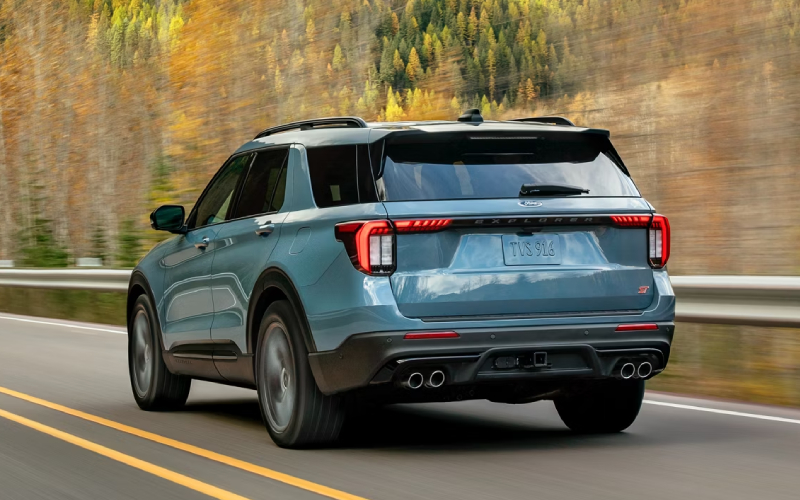
Rock Hill Ford – 2026 Ford Explorer vs 2026 Honda Pilot: Which SUV gives families the best hands-free driving confidence near Fort Mill, SC?
Hands-free highway assistance is one of the most frequent comparison points shoppers ask about when cross-shopping three-row SUVs. If you are weighing Explorer® against Pilot, the big question is simple: which one delivers a true hands-off capability on approved highways while helping reduce fatigue on longer trips around the Carolinas? Below, we break down the difference in how Ford and Honda approach driver assistance, how the systems work in the real world, and what families should expect when the miles start adding up.
Ford’s approach centers on BlueCruise, a hands-free highway driving assistance feature available on select Explorer trims. BlueCruise helps you accelerate, brake, and steer within a lane on pre-qualified, divided highways while you keep your eyes on the road. It is part of a broader suite of Ford Co-Pilot360® technologies that emphasize visibility, lane guidance, and adaptive speed control. By contrast, the Honda Pilot’s Honda Sensing® bundle brings excellent confidence through Adaptive Cruise Control with Low-Speed Follow, Lane Keeping Assist, and Road Departure Mitigation—comprehensive support, but not hands-free capability. That’s the core difference: one offers hands-off operation in mapped zones; the other offers robust hands-on driver support.
How BlueCruise changes daily driving
Real-world benefits show up quickly. On commutes that include stretches of I-77 or I-485, BlueCruise can help shoulder the workload of steering inputs and speed adjustments, particularly helpful on longer family drives. Keeping your hands off the wheel in those approved zones (while still paying attention to the road) can reduce stress during traffic surges and long stints behind the wheel. Pair BlueCruise with the Explorer’s confident chassis and available performance hardware, and you get a three-row SUV that not only eases the driver’s burden but also remains poised when it is time to pass, merge, or tow.
Honda Sensing® is a proven, thoughtful suite. Adaptive Cruise Control with Low-Speed Follow, Collision Mitigation Braking System™, and Lane Keeping Assist are all excellent helpers for steady, attentive driving. For many families, this will feel familiar and intuitive. Still, for shoppers specifically seeking hands-free capability on approved highways, Pilot does not meet that criterion today. If that feature is on your must-have list, the Explorer is the clear answer.
What about visibility and situational awareness?
Both SUVs provide meaningful camera coverage. Explorer offers an available 360-Degree Camera, helpful for tight parking lots, school pickup lines, and hitching up a trailer. Pilot’s Multi-View Camera System—standard on TrailSport and above—delivers helpful perspectives off-road and in close quarters as well. The differences come down to how each brand layers visibility with driver assistance. Explorer pairs comprehensive camera views with BlueCruise in mapped zones and Ford Co-Pilot360® support nearly everywhere else; Pilot layers strong camera coverage with Honda Sensing® for full-time, hands-on assistance. If your travel mix leans heavily on highway miles where hands-free zones are common, the advantage leans Explorer.
An often-overlooked factor is driver fatigue on family trips. Multi-hour drives with frequent speed changes can wear on anyone. Hands-free assistance in those approved segments can provide a noticeable mental break while keeping you engaged and watchful. That subtle difference—a reduction in micro-corrections and constant steering pressure—adds up over time, which is why families who travel frequently tend to prioritize it.
Powertrain and chassis context that amplifies the tech
Technology is most effective when the underlying platform is composed and confidence-inspiring. Explorer’s standard rear-wheel-drive layout, available Intelligent 4WD, and optional 3.0L EcoBoost® V6 with up to 400 horsepower deliver a planted, responsive feel. That dynamic polish complements BlueCruise on the highway and makes towing or lane changes feel calm and predictable. Pilot’s 285-hp V-6 and i-VTM4® AWD system (trim-dependent) provide smooth, all-conditions traction and a refined ride. Both are capable; the context for hands-free assistance favors Explorer because the chassis and available power reserves so readily support the tech’s goal—reducing effort while preserving confidence.
- Hands-free capability: Explorer offers BlueCruise hands-free highway driving in approved zones; Pilot’s Honda Sensing® is hands-on assistance only.
- Highway composure: Explorer’s rear-wheel-drive architecture and available twin-turbo V6 power bolster stability and decisive passing.
- Camera coverage: Both provide robust visibility; Explorer’s 360-Degree Camera integrates naturally with its highway-first assistance strategy.
Families who prioritize tech that meaningfully eases highway miles will likely feel at home in Explorer. For others who value a hands-on system with comprehensive alerts and assistance, Pilot remains a solid contender. The key is to match the system to your actual driving patterns—how much interstate time you rack up, how often you tow, and how sensitive you are to long-haul fatigue.
Frequently Asked Questions:
Is BlueCruise truly hands-free on all roads?
No. BlueCruise is hands-free only on approved, divided highways mapped for the system. Outside of those zones, the system reverts to hands-on driver assistance.
Does Pilot offer a comparable hands-free feature?
Pilot’s Honda Sensing® suite is comprehensive, but it does not provide hands-free highway driving; it remains a hands-on driver-assist platform.
Will hands-free assistance help with towing?
Hands-free systems are designed primarily for steady-state highway travel in mapped zones. For towing, Explorer’s rear-wheel-drive dynamics and available torque-rich EcoBoost® power contribute most to confidence, while BlueCruise can help reduce fatigue during longer transits in approved areas.
When you test drive, consider running a familiar loop that includes your typical mix of surface streets and highway segments. Try lane changes, merges, and a sustained cruise to see how assistance layers in. Then think about how often your family travels those mapped interstate routes. For many shoppers, the answer becomes obvious after just a few miles: the combination of high-confidence dynamics and hands-free capability makes a noticeable difference.
If you are ready to explore hands-free highway assistance in context, schedule time to sample BlueCruise in Explorer® and compare it to Pilot’s excellent Honda Sensing®. We welcome you to start your research with Rock Hill Ford, serving Fort Mill, Indian Trail, and York, and then take a drive that mirrors your life. Seeing how these systems perform on your roads is the most reliable way to decide what’s right for your family.
Request more 2026 Ford Explorer information
Connect with us


